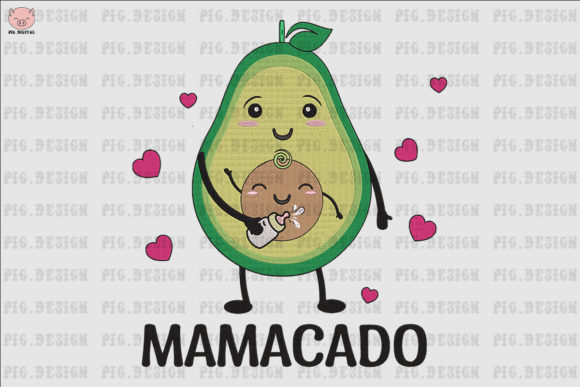
Mamacado Baby Milk: A Designer's Review for Small Business Merch
As an experienced embroidery designer who has spent years refining designs for everything from high-end fashion to local boutique labels, I approach every new digital file with a mix of excitement and skepticism. Today, I am reviewing Mamacado Baby Milk, a machine embroidery design that markets itself as the perfect way to decorate beautiful projects for clothes, home decor, or gifts. While the description suggests a playful, friendly aesthetic, my primary focus is on how this design functions in a real-world commercial environment. Can it stand up to the rigors of small business merchandise? Does it hold its shape when stitched onto varied fabrics like cotton canvas or polyester blends? Let us dive into a professional review of this embroidery file.
First Impressions: The Personality of Mamacado Baby Milk
The title Mamacado Baby Milk immediately evokes a sense of warmth, nurturing, and perhaps a touch of rustic charm. For a brand identity focused on motherhood, baby products, or handmade goods, this design likely carries a soft, approachable visual language. Unlike stark corporate logos, this design asset appears designed to feel personal and inviting. When viewing the initial mockup, one must ask if the style leans more towards modern minimalism or decorative whimsy. In the world of custom apparel, the difference between a "cute" design and a "professional" design often lies in the execution of the stitch density and the clarity of the outlines. If Mamacado Baby Milk maintains clean lines while offering that gentle, handcrafted feel, it could be a powerhouse for brands wanting to convey trust and care without sacrificing quality.
Real-World Application: From Patches to Product Labels
Imagine a local café or a boutique bakery looking to expand their revenue streams. They need embroidered patches for their staff aprons, cap embroidery for their baristas, and a subtle mark for their tote bag design. This is where Mamacado Baby Milk shines as a potential solution. Its description highlights versatility, suggesting it works well on home decor and gifts. In a commercial setting, this translates to branded product add-ons that customers love to keep.
For a small business owner, the ability to use a single design across multiple items is crucial for maintaining visual consistency. Imagine a florist using this design on a small embroidered patch attached to a bouquet ribbon, then scaling it slightly for a cap worn by their delivery team. The design's potential as a chest logo accent or a sleeve detail makes it adaptable for uniforms that need to look cohesive yet distinct. Furthermore, for Etsy sellers and craft business assets, this file offers a way to elevate the perceived value of a handmade product. A simple tote bag becomes a premium item when adorned with a professionally stitched Mamacado Baby Milk motif, signaling to the buyer that attention to detail matters.
Strategic Branding and Customer Trust
In the competitive landscape of small business merch, your branding is your first line of defense against being forgotten. A poorly executed embroidery job can damage customer trust, making a product look cheap regardless of its actual quality. Conversely, a well-stitched design reinforces professionalism. If Mamacado Baby Milk delivers a finished product that feels durable and crisp, it directly impacts buyer engagement. Customers are more likely to wear a shirt or carry a bag featuring a design that looks intentional and high-quality.
This design can serve as a powerful tool for brand identity, especially for businesses in the Mother category or those selling handmade products. It bridges the gap between a generic store-bought item and a unique, artisanal creation. When used correctly, the design transforms a standard uniform into a statement piece that employees are proud to wear, which in turn reflects positively on the business. However, this relies entirely on the technical execution of the embroidery file.
Critical Considerations for Commercial Use
While the potential is there, an experienced designer knows that not every design is suitable for every application. There are specific scenarios where Mamacado Baby Milk requires careful evaluation before mass production. First, consider the size. If you intend to create tiny lettering or a miniature patch, intricate details may get lost or cause thread breakage. Embroidered patches need enough surface area to breathe; otherwise, the fabric puckers, ruining the look of the final product.
Curved surfaces, such as the front of a cap, present another challenge. Designs with high stitch density or long, straight stitches can distort when pulled over a curved form. You must ensure that the design accommodates the natural tension of the fabric. Additionally, textured fabrics like heavy denim or rough canvas can obscure fine details. Dark uniforms also pose a risk if the thread colors lack sufficient contrast, making the design invisible or muddy. Finally, items that require frequent washing, such as work shirts or apron embroidery, demand a design that can withstand abrasion without pilling or fading. If Mamacado Baby Milk lacks the necessary structural integrity for these conditions, it should be reserved for lighter use cases like gift tags or decorative home decor.
Essential Notes for the Embroidery Professional
Before committing to a large run of Mamacado Baby Milk designs, a few practical steps are non-negotiable. As a designer, I always recommend testing the file in black and white first to check the silhouette and spacing. This ensures the design holds its shape even without color variations. Next, inspect the stitch density. High density is good for durability but bad for flexibility; if the design is too dense, it will feel stiff and uncomfortable on clothing.
You must confirm the hoop size required for the design to ensure it fits your intended garments. Using the wrong stabilizer can lead to misalignment or fabric distortion, so always test on the same fabric texture you plan to use for the final product. Creating a printable mockup for client approval is also a smart move; it allows you to visualize the design on different items like tote bags or caps before spending time on the machine. Compare this design asset beside other elements of your brand kit to ensure it doesn't clash with existing logos or typography.
Most importantly, verify the commercial licensing terms. Just because a file is available for purchase does not automatically grant the right to sell merchandise created with it. Ensure you have the proper permissions for commercial embroidery projects. Also, double-check the thread colors provided in the file. If the default palette does not match your brand's specific color codes, be prepared to adjust the digitization or select alternative threads to maintain brand identity.
Final Verdict
Mamacado Baby Milk presents a compelling option for small business owners, embroidery shops, and handmade brands looking to add a touch of personality to their merchandise. Its friendly aesthetic aligns perfectly with brands in the Mother category or those focusing on gifts and home decor. However, success depends on rigorous testing regarding stitch density, fabric choice, and stabilization. By treating this design with the same professional scrutiny as any major brand asset, you can transform a simple digital file into a valuable component of your business identity. Whether it ends up on a cap, a tote bag, or a product label, the key is ensuring the finished product meets the high standards your customers expect.